Doll making for Aunties

“Only the children know what they’re look for,” said the little prince. “They spend their lives on a rag doll and it becomes very important, and if it’s taken away from them, they cry…”

I’m not sure I ever had a rag doll that I loved. My teddy – a present at birth – still sleeps in my arms at night. I wonder how many modern toys would last 30-odd years of cuddles? I do know, though, that LittleBigSis has a ragdoll she has loved since childhood. To me, it is a hideous, knitted, ghastly thing. To LittleBigSis, it is her Daisy-May. Daisy-May was a present, if I remember rightly, from a speaker at a Christian Holiday Retreat we went to. I don’t know if this speaker knitted her herself, although I suspect so. Perhaps it was the unexpected gift that made Daisy-May so special. Or maybe it was something else, something about her little raggedy face.

I have four (4!?) nieces now. They are beautiful things, and it has been a fabulous year getting to know them all. LL can hold a conversation now, whilst the youngest, TH, is still just a baby (although a very smiley one). For LL’s third birthday, I wanted to make her a doll. Easy enough, I thought. But it had to be the perfect doll.

I know nothing about sewing. Technically, that’s not true, but I certainly don’t know very much. LittleBigSis was always the sewer. I just didn’t have the patience. So, I knew I was going to have to start from the beginning.

The first doll I tried, I ordered blank – pre sewn – from eBay. The seller, 9evgeniva, designed the doll herself, before sewing it together. I liked the weight, and the chunkiness of the doll, this was the sort of thing I was looking for.

Baby boiling

Baby boiling


She was a little pale, though, so I used that age-old technique of boiling her in tea. Tea actually stains and dyes a fabric really well, and is far cheaper than fabric dye. I imagine you can do similar dyes using other natural plants (nettles, maybe?). The process is, of course, a great deal easier before the doll is stuffed. This little dolly to an age to dry out, and has a funny smell about her now…

I added hair, but found, again, that it would have been easier to add the facial features before she’d been sewed together. And, when it came to dressing her, I realised that I had no idea how to make clothes. It was starting to look a lot more complicated than I had thought.

This little dolly is still unfinished. I *love* the feel of her, but she’s just a bit too tough right now.

I needed to have a rethink. The internet is full of free patterns for rag dolls. In the end, a rag doll can be as simple as you like and I found a number of examples I could give a go. A basic head, torso, arms, legs – sew them together, stuff them. Simples. One of the main things I was looking for in those early attempts, was a doll who I didn’t need to make clothes for. Some of these patterns were great for that. I learnt a lot about sewing, putting together my first rag doll, and a lot about patience. There’s something beautiful about creating something from a bunch of nothing. We should all spend time doing that.
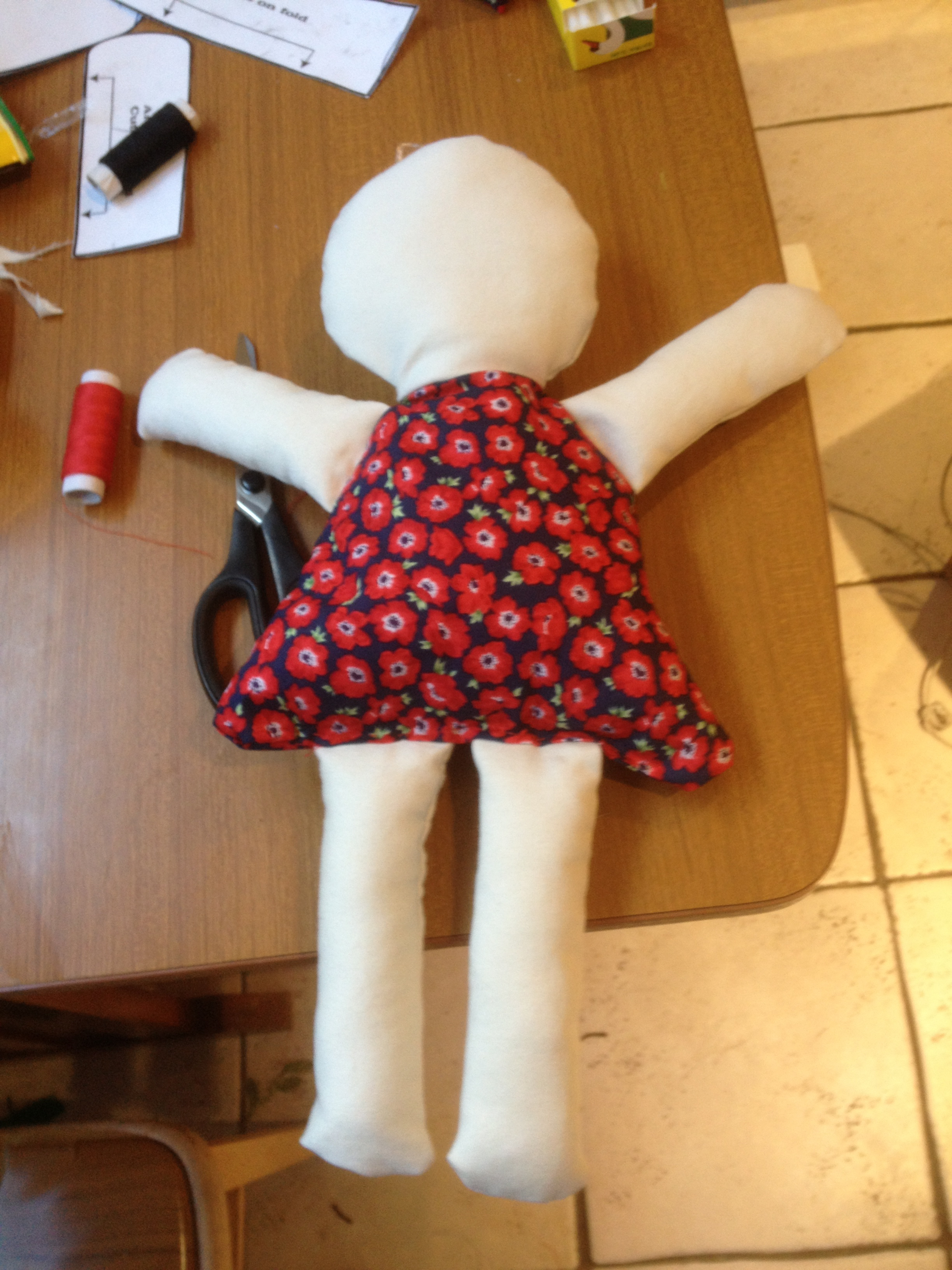
First sewn ragdoll

The first doll I ever sewed. She’s cute, no? 
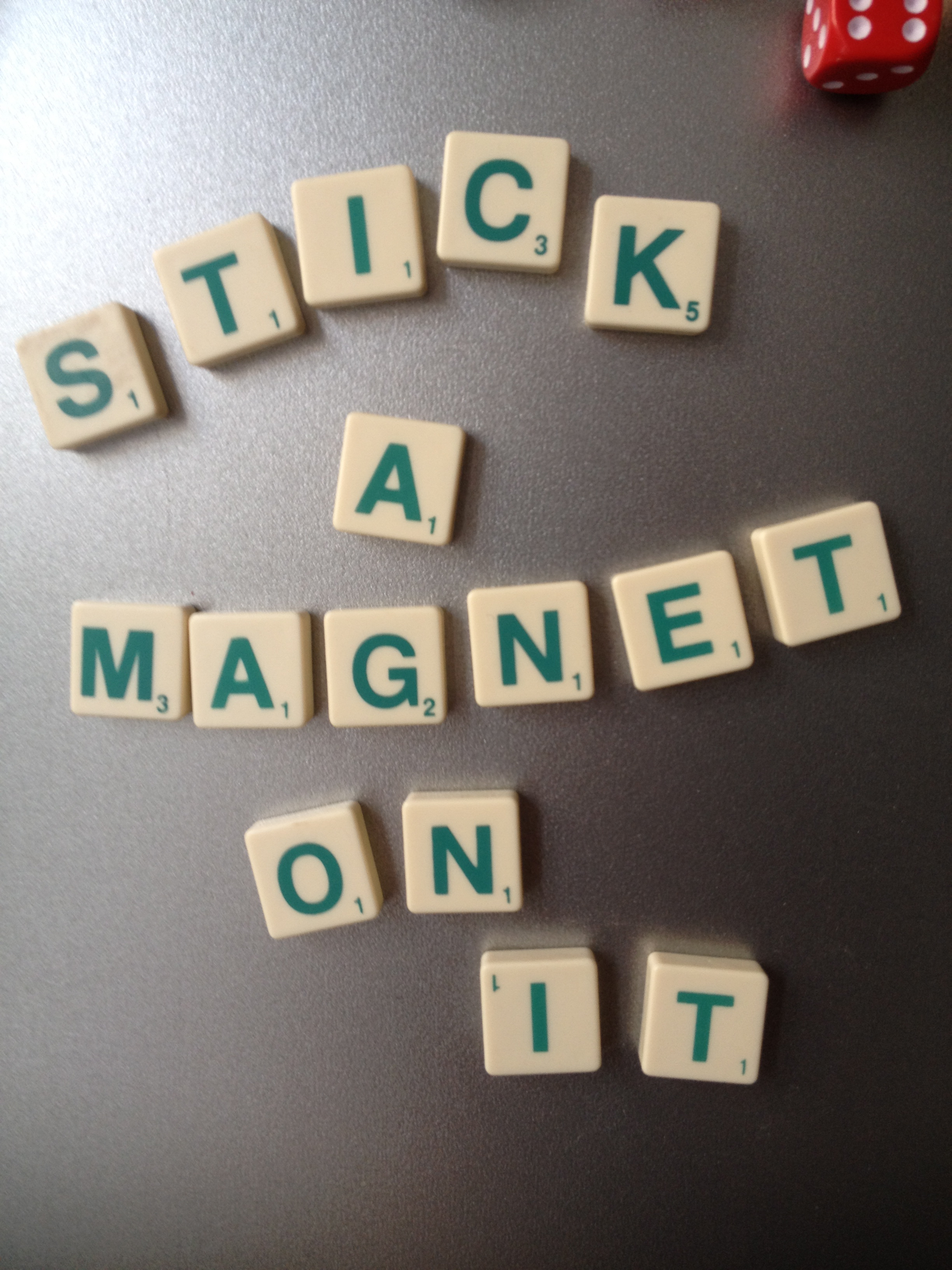


Stick a magnet on it!

Stick a magnet on it

If you haven’t seen the American show Portlandia, then I suggest you get to it immediately. It’s a series of sketches about the types of people that, allegedly, live in Portland, Oregon. In Portland, they care about the environment, they are politically aware, and they’re more than a little weird. I want to move there when I grow up.

Anyway. Portlandia has a sketch called ‘Put a Bird on it!”. I tried to find a YouTube clip to link to, but didn’t manage it. The premise: you can put a bird on anything, and it’ll make it better.

That was the inspiration for last summer’s new idea: Stick a Magnet on it! Of course, as business ideas go, it’s genius. And it’s a fun way to spend an afternoon. Whilst Stick a Magnet on it hasn’t yet got its own Etsy shop, I’d like to think the name has been trademarked and no one can now steal it. (I might do it one day, if only to prove to the Husband what a business genius I am… I think he doubts it).

The beauty of the idea, is that you can put a magnet on anything, and make it a magnet. Sounds simple, right? And yet, I haven’t been able to find one shop on the internet, whose sole marketing plan is sticking magnets on junk… so there’s a gap in the market. And people always need magnets.

Here are a few of my designs. I call them designs… I’m not quite sure that’s fair.

Scrabble magnets

The holes in scrabble tiles were made for magnets

IMG_2564

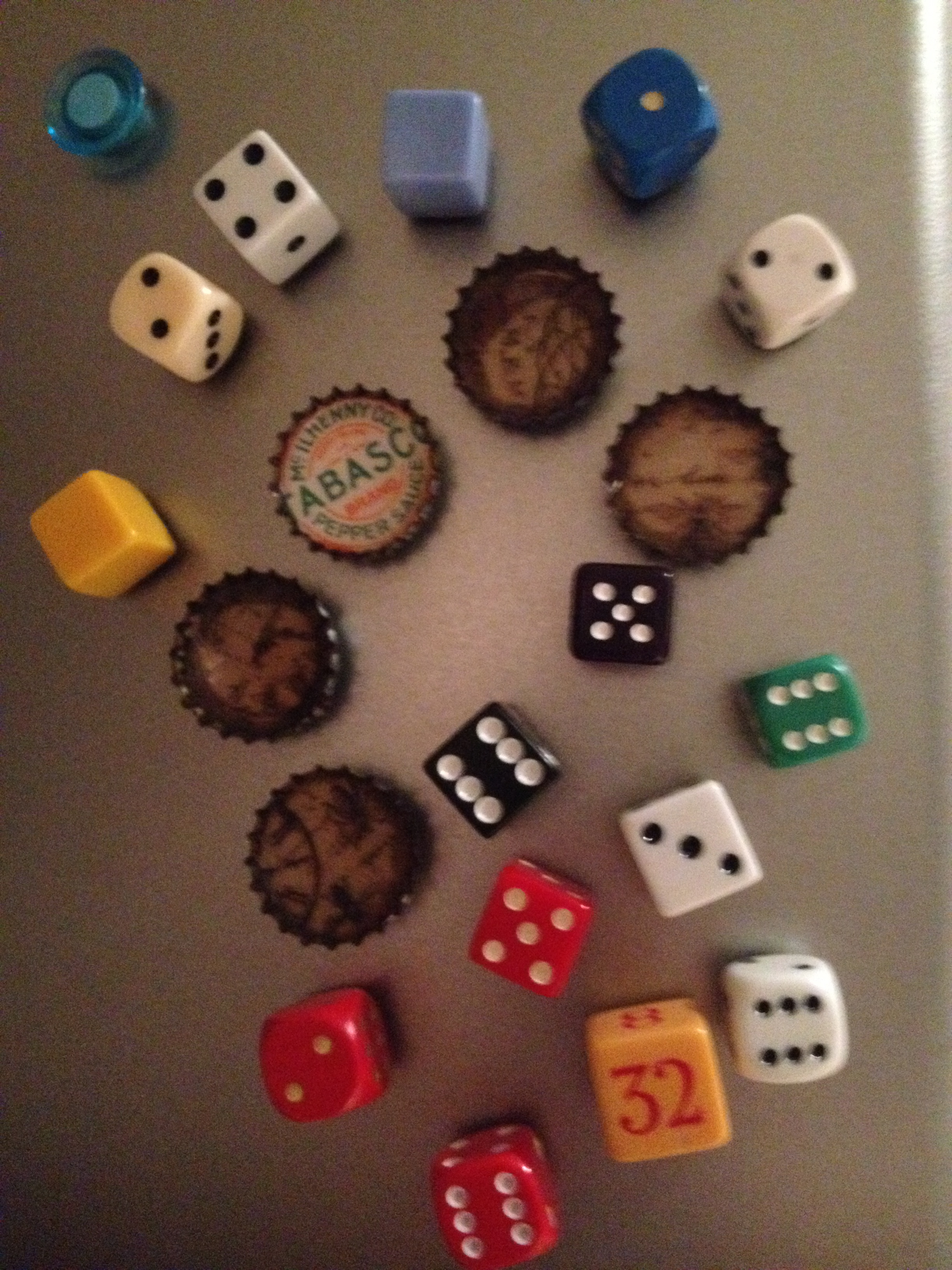
Dice are great to stick magnets to


Beer cap magnets

Beer cap magnets

Someone pointed out that sticking magnets on stuff is something that anyone can do at home. All you need is magnets, junk, and glue. That’s as maybe, but I came up with the idea first, okay??


“I just don’t want to, write?”

Something happened, it seems, that stopped me blogging. It didn’t just stop me blogging, it stopped me writing altogether. I’m not sure when it happened, only that it did… and now I’m sorry.

When I first went back to work part-time after what I suppose used to be called a nervous breakdown, everyone was very pleased. What a triumph! I thought so, too. There were days (when I was at my worst) where I couldn’t leave the house without being crippled by fear and, then, there I was, back at work and managing. Not only managing, but actually enjoying it. The buzz I used to feel for teaching was back – the kids were great – and I had proved to myself that I wasn’t, actually, totally useless and a drain on society.

That was two academic years ago. For the first term, I had people looking out for me at work, and some amazing support from friends and family. And then, slowly, imperceptibly, that support went away.

This is not a bad thing, of course. I didn’t need that support anymore. Not only did I not need it, but it would have been detrimental to my recovery to rely on other people as much, then, as I had needed to before. I liken it to being a teenager, in many ways. It took me months to understand why I was desperate for people’s help one minute, and then felt suffocated by their meddling the next. (The Husband got the worst of this, for which I apologise). I digress. The fact is, I appeared ‘better’ and people left me to it.

When I first when back to work, I used my two days off to get ‘better’. I have since, of course, discovered that better is a process not a destination – but at the time, I really believed in a magical morning when I would wake up CURED. One morning a week, I saw a counsellor, and I spent the rest of the day exhausted. Emotionally and physically battered. So I slept a lot, and I watched a lot of bad TV. The other day I wasn’t at work, I spent racked with worry about work, and drowning in CBT forms to make it better. And bad TV. When I first went back to work, this was necessary. And then, it wasn’t.

I needed to fill my days with something. I needed to find myself something to do. So I went on a writing course. In fact, I went on a couple. People started asking about my writing and I, full of excitement about my new hobby, wanted to talk about it. The feedback I got from these courses was positive. I began to feel like being a writer  was something I could actually do. And that’s where it went wrong. The minute I began to believe that this was something I could do, I was plagued with all those old thoughts about why I couldn’t. All the little voices that mocked me for even believing it was possible. The manuscript I had worked on for so many months, is still unfinished. Opening the file makes me feel physically sick.

And people kept asking about it.

This weekend, my Dad, trying to make conversation where we have something in common, asked how the writing was going. I couldn’t answer. I choked. The thing is, it isn’t going. I’m not writing at all. Not only am I not writing, I don’t even think I want to write. Writing is stupid. If I’m not going to be Margaret Atwood, Doris Lessing… Kafka – for God’s Sake – then I don’t want to write at all.

So I spend my days off – since you asked – doing absolutely nothing but make myself miserable and watch bad TV and I HATE EVERY MINUTE OF IT. Which is not something to say to your friends, or colleagues, who all have to work full-time like normal people. I am wasting the gift I have been given – the gift of freedom from full-time work – and I feel guilty for it. And the guilt paralyses me, and eats away at all the hard work I did in recovering.

I am still a very long way from being ‘better’. I need to remind myself, again, of that poem that so resonated with me: “You do not have to be good”. When I take my eye off the ball, I am still likely to slip back into unhealthy ways of thinking (and of course! I thought like that for 30 years, it isn’t going to go away so easily). I need to write for fun, not for any other reason. I need to give myself the freedom to just enjoy stuff, without needing to prove myself. I need to be better at telling people, when they ask, “actually, I’m part-time because I believe that there should be more to life than work… I’m just still working out what that means”.


Relocation Relocation – Cavy style

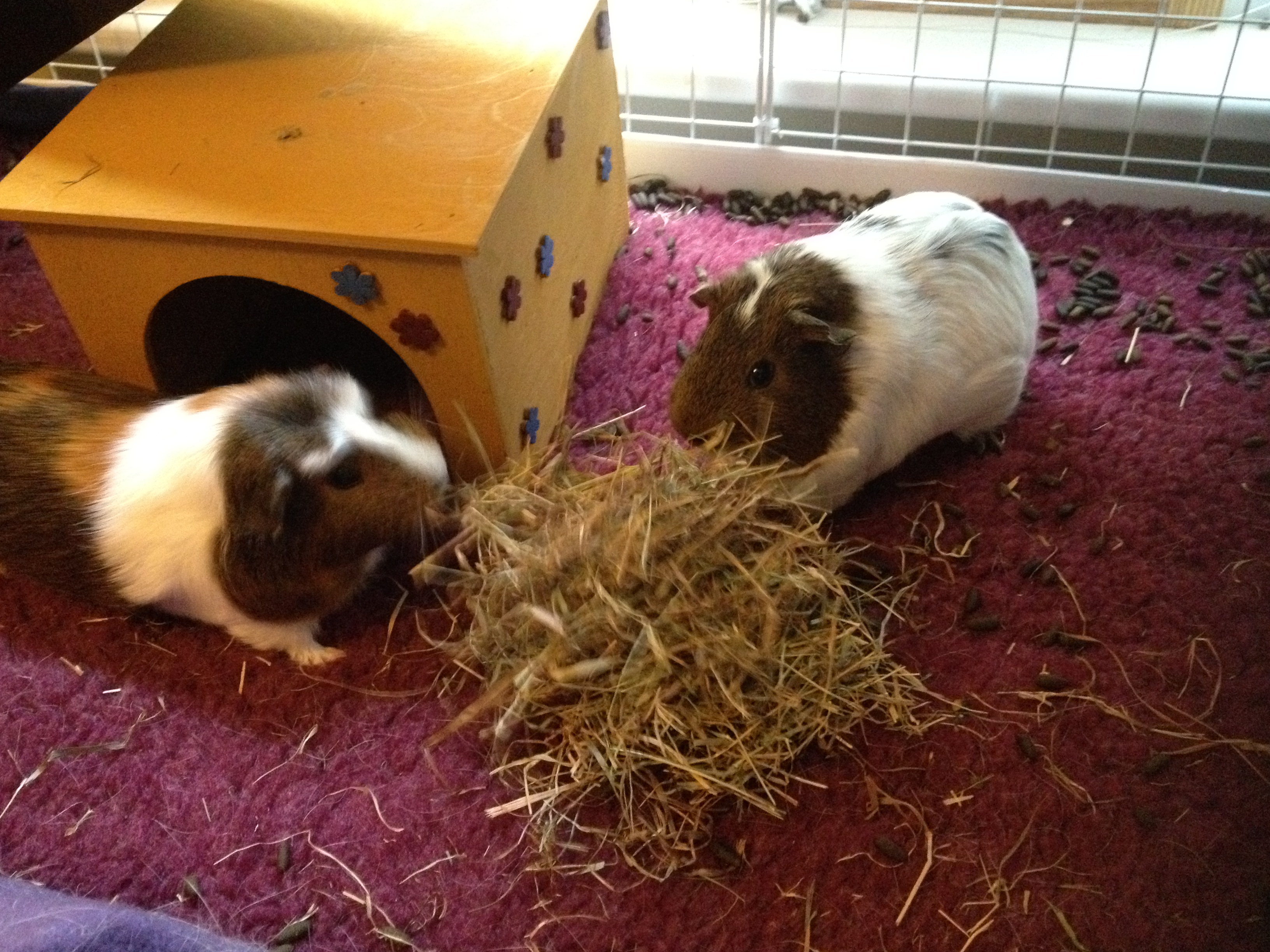
The girlsI’m not the world’s most natural pet owner. I’ll confess (though someone who loves animals more than I do, might get upset) that I got our little guinea pigs as part of my recovery. It felt important to have something to wake up for in the morning, and something to give me some routine. To that end, they have been marvellous – no matter how awful I feel, I have always managed to pull myself out of bed, or off the sofa to give them what they’re squeaking for.

Guinea pigs are shy, though, and I have learned a lesson in that, too. They love me as much as any pet loves its owner (I am the bringer of greenery!) but they don’t need me – not me, personally – and that ‘rejection’ has helped me a great deal, too. An illustration for life, and all the relationships I have. I have a lot of people that love me, but I will never find someone who just can’t live without me (though God Knows I’ve tried over the years) because that just isn’t healthy, or sane. Guinea pigs taught me that. (I hear most people learn it some other, normal, way – but there you go).

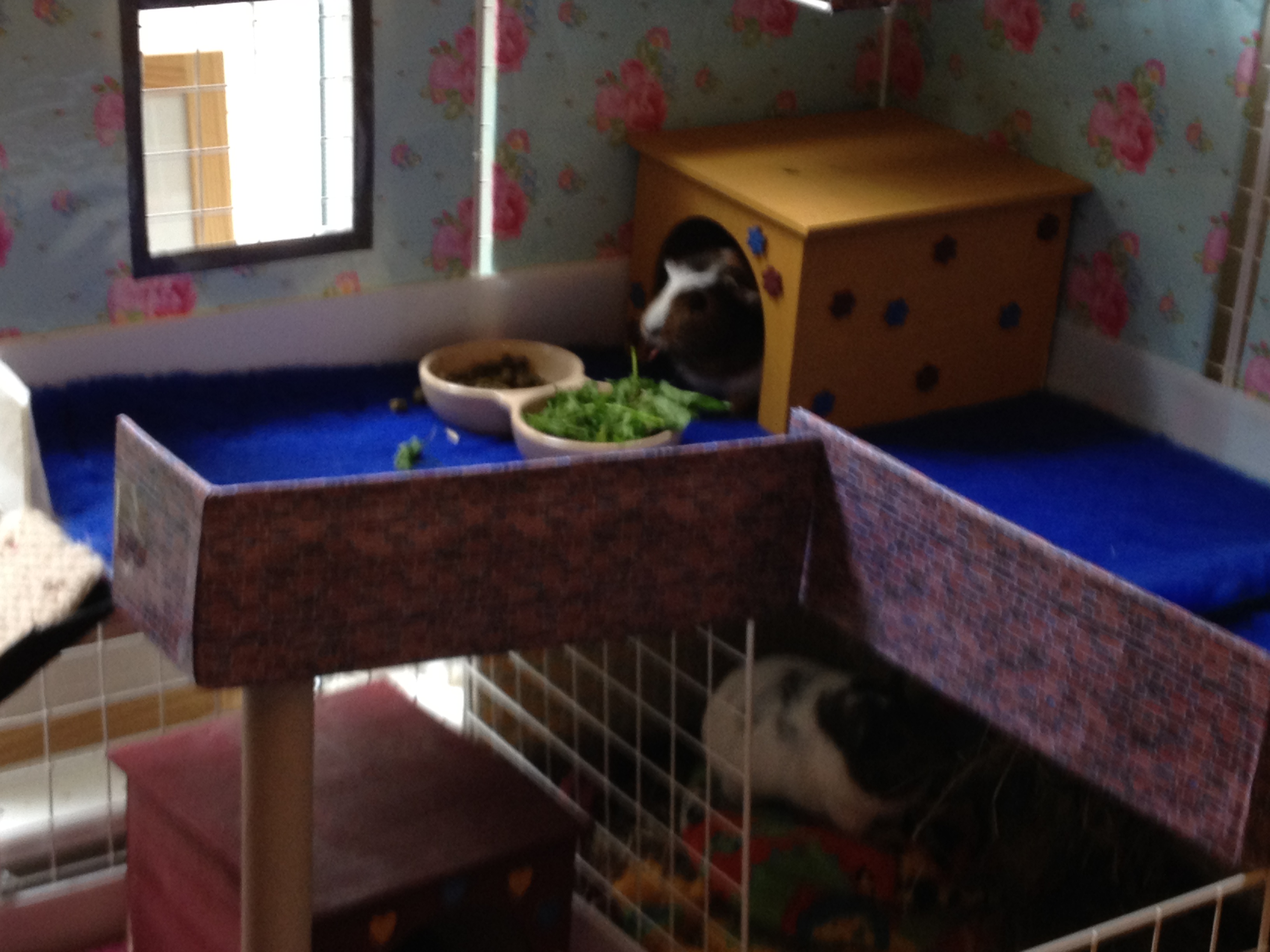
One thing I can do for my little friends, though, is give them a home that they will love. Their cage has evolved a lot over the last year – within months it looks dingy and chewed up, so we go back to the drawing board and revise it. For a while they had a mansion, all carpeted and wall-papered. I liked it, but it was a bugger to clean.

Piggy mansionNot only that, but they loved to chew the walls. And, eventually, they never left that little section underneath the second floor, except to eat…

The amount of space this baby took up in our tiny little second bedroom, started to seem a little silly – and Spring is all about simplifying, so I redesigned (and roped the Husband into doing some manual labour).

Husband Slavery

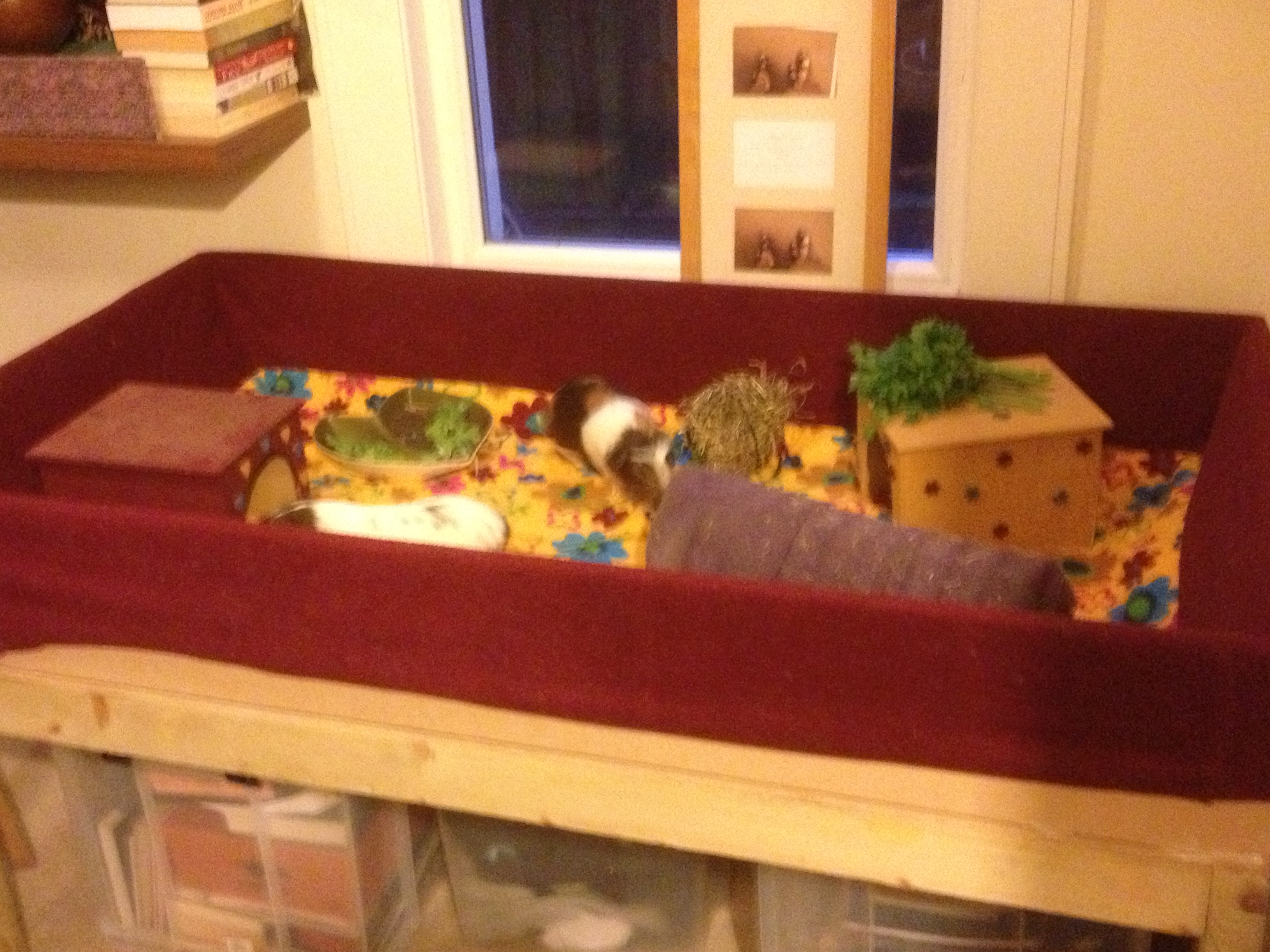
It’s a simply, one storey wooden design, that frees up more space in our room, without the pigs losing too much running room. They still come out and run around regularly, so the ‘cage’ only needs to be big enough for the rest of the time. Some of my friends were a little worried that Frida and Audrey might jump over the sides. To them, I said “Yeah, you don’t know my girls… they’re not going to do any jumping”. Frida still stands on her back legs and pokes her head over the side when she hears the fridge door, but otherwise, they’re quite incapable of getting that high. IMG_3091

Only a few things need to be done, now. You’ll see there’s no water bottle in the picture. Taking away the cage walls, means we’ll have to rethink how to hold up their water bottle. For now, we’ve rigged it up to an old cube grid, but it looks pretty dire. Any ideas would be gratefully received!


Super-teacher!

First day back at school today; an INSET day. No kids, just lots of very tanned, very healthy looking teachers all celebrating some excellent exam results and trading stories about the Summer. These early days back are full of hope and enthusiasm; something that rarely lasts until the end of the month, even.

As part of a session today, we were instructed to invent superhero teachers; to give them the super-powers and funky gadgets necessary to make the perfect teacher. We had a lot of fun with it. Our group, for example, kitted out our superhero with a utility belt that delivered fresh coffee on tap, and a headset that translated “urban” into English. We had a sonic-powered paralyser, as well… just in case.

What worried me, on hearing the ideas of other teachers, was this: So many of the powers and devices we would give to our teachers dealt with behaviour issues. Yes, we were having fun, but is a super-cane, or a magic-extending ruler to slap the kids with, really what we most need as teachers?? Other gadgets and powers included sidekicks that would do all our (relentless) admin for us, or microchips in our head that would “download” new initiatives and implement them (without us having to change EVERYTHING about the way we teach AGAIN just because it’s a new year).

But the worst…. the WORST… idea that I heard (that this particular group thought was their very best idea) was this: A time-travelling device so they could go into the future, see what was on the exam paper, and then teach TO THE TEST, so that their students would all pass.

This breaks my heart. THIS is the reason I have fallen out of love with teaching. If, or when, I have children, I want their education to be about learning for the LOVE of learning, and not for passing tests. I want them to get excited as they acquire knowledge, not focus on passing exams solely for the piece of paper… and where it might take them next.

I’m sure I’ve said it all before…. but, in the wake of the worst National exam results for a long time, I think it’s worth saying again.

Fighting to stay ill

“If neurotic is wanting two mutually exclusive things at one and the same time, then I’m neurotic as hell. I’ll be flying back and forth between one mutually exclusive thing and another for the rest of my days.”  Sylvia Plath, The Bell Jar

I sometimes wonder what Sylvia Plath would’ve made of Cognitive Behavioural Therapy. In a nutshell, CBT teaches you to recognise errors in your thinking and to change them, thus changing your usual behaviours and making yourself feel much better. Errors in thinking might include, for example, ‘catastrophising’ and ‘fortune-telling’, where you might think “Today is going to be a total nightmare, because year 9 hate me and do everything they can to piss me off”.

The trick is to break the thought down into more sensible, rational thoughts: “Year 9 don’t hate me, one of them smiled at me in the playground last week”, “Children aren’t naughty to annoy the teacher, in fact, they rarely think about how the teacher might feel anyway”, “There might be many wonderful things that happen today if I get out of bed and go see”.

And so, the thinker doesn’t stay cowering under the duvet and, instead, leaps out of bed full of the joys of spring and the whole day is wonderful. (sorta).

There are countless studies about how effective CBT is, compared to medications, other forms of therapy, and any other way you might try to treat depression and anxiety… but it has one flaw. You have to believe in the premise. You have to believe that in order to get better you have to change the way you think. You have to accept that YOU THINK WRONG.

And so, I wonder what an intelligent, creative woman like Sylvia might have thought.


My thoughts, for a long time included some of these beauties:

1. If I accept that my thinking is wrong, I have to accept that I am STUPID. I am an intelligent, creative woman… so my thinking must be perfect.

2. I do not want to be a smiling, affable goon. I want to fight injustice and get righteously ANGRY… and CBT will stop me from doing this.

3. I’d rather have a lobotomy and I bet it’d have the same results.

4. People who are happy and content all the time don’t get anything done. If Gandhi and used CBT, where would we be today? I am like Gandhi, obviously.

5. Teaching really *is* crap and people really *do* look at me funny and everyone else in the world is stupid and doesn’t *feel* things the same way I do – I am special and sensitive and better than most people. I am not of this world, and so your rules don’t apply.


And, for months, maybe years, I was comforted by these totally reasonable thoughts. I read The Bell Jar as a teenager and found it uplifting and inspirational. I read Prozac Nation and giggled at all the idiots she was surrounded by. Girl, Interrupted only made me love crazy Winona even more. How beautiful it was to be a crazy, intelligent, creative woman.

And how utterly pointless.

Because, now that I start to feel a little better, I can see that there are a few flaws in those thoughts of mine. So, to CBT ’em:

1. You’re intelligent… but you’re also prone to exaggeration, melodrama and romanticism. All of which might make for a good writer (one day) but not a very effective wife, friend, or teacher. Nobody’s thinking is perfect.

2. It will be a great deal easier to change the bits of the world that you want to, if you can actually get out of bed in the mornings.

3. If all you’re doing all day is staying in bed or drinking yourself into a stupor to cope with the crapness of life, then no one would notice if you had a lobotomy either. You are not being a creative, intelligent woman if you don’t change out of your pyjamas for days on end.

4. You aren’t Gandhi. And, even if you were, Gandhi did a great deal of smiling and laughing. None of which you are doing right now. Also, Gandhi got out of bed. (but he did wear the equivalent of PJs, but that was for a good reason).

5. Blah blah. Life isn’t always good, obviously. But, listen, no one owes you anything and things certainly aren’t going to get better while you sit around complaining. Nor is anyone else going to be able to fix this for you. However much they love you. Now shut up.


So, it seems, somewhere along the way, I got sold on the idea of CBT. And I feel so much better… and I am a great deal more pleasant to be around… and I am writing more… and I still get to wear a silly hat, and be ‘different’ and creative … but now I can do it all whilst smiling. (which, it turns out, makes you feel a lot better than sitting around cynically bemoaning the state of everyone else).

Stress is a four-letter word

Having read the news today that the chief of OFSTED, Sir Michael Wilshaw, believes that teachers don’t know the meaning of the word stress, I find myself speechless. I’m not angry, though I might once have been, because I have become resigned to the idea that so many people outside of the occupation have no real idea of what it’s like. We all went to school, so we all think we can, in some way, comment on what it must be like to be a teacher. I have friends who “think about teaching” whenever they are lost for where to go next. I have friends who tell me “yeah, but you work at a comprehensive in Surrey” – as if that means it must be easy. I get it. I don’t understand it – just like I didn’t understand the GP who, after signing me off for six months with chronic stress, anxiety and depression said “I often think of being a teacher just for the summer holidays”. But I get it. Teaching must be lovely. You finish work at 3.30, and you get 13 weeks off a year – utter bliss.

Wilshaw tells us that teachers can’t understand stress like his unemployed father did. (We have a regular job after all.) That we can’t understand how it was when he started teaching – when things were so much worse (I wonder if they could still hit the kids back then?). It doesn’t seem to matter to him that teaching has the third highest amount of stress-related sick leave. We just have it easy.

I am a good teacher. In my years of teaching, I have progressed through the ranks from a ‘mere classroom teacher’ to being the head, at one time, of two fantastic departments. I have trained other teachers, I have passed leadership training courses, and I have Chartered London Teacher Status. My behaviour management is excellent, and on more than one occasion, I have taken exam classes that blew their ‘target grades’ out of the water. The last GCSE cohort I taught, got 9 A*s in a class of 21. I am a good teacher.

So, how is it that I woke up one day and couldn’t go into school? That it was so bad that I had to take six months of work (even when I begged them to let me go back – but they told me I wasn’t ready?)? I’ll tell you. It’s because teaching is, by it’s nature, a stressful job. Kids are unpredictable and unpleasant on occasion. Other teachers more so. If you work with difficult adults, then you only come half way to understanding difficult teenagers. Teenagers don’t reason, they don’t believe in politeness, they don’t worry that if they treat you badly they might look bad. Teenagers are not adults.

The problem, if you ask me, isn’t that teachers don’t know that they’ve got it good, but that people who used to be teachers (Ofsted inspectors, and Leadership in schools) forget what it’s like for the little guy. We are the front line. The victims sent OTT – while they sit back in their offices and think up new, and ridiculous, ways to get children to be ‘more involved in their learning’. “Be gentle with them” they say, because everyone knows how hard it is to be a teenager. Yes, but not as hard as it is to sort a teenager out once they’ve been pandered to all their lives. “He says he’s sorry” they say, but only because really they are far too nervous to tell the child off further, in case said child ‘loses their temper’.

Here’s a way to improve grades and make a better generation for the future (and it doesn’t involve making exams easier)- put your teachers first… if you can do that, then the fantastic ‘teaching and learning’ will naturally follow.

Writing Nonsense

A little snippet from the course I went on today, which was about writing in the style of Milligan, Lear, Lewis Carroll, etc. It’s probably not a type of writing I think I’ll focus on in my own work, but it was a really useful lesson in not taking my writing seriously – just having fun with it. One of the final (ten minute) activities was to write a nonsensical obituary. Here’s mine:

Lucien Bell, inventor of the Time-splitting device that took his name, passed into the night on February the second after a short illness that had not yet taken hold. Born before his elder brother, Frederic, Lucien was always a child of which no one could say anything, although his mother often did. 

Bell was educated at an Inner London Academy in the 1830s and graduated from Cambridge at the age of eight, in 1945. He spent the war years in Ancient Rome where he met his first wife, Claudia. Their marriage was short-lived, however, as Lucien was forced to return to the 1920s, and there he met his eighth wife, Millie. Though Claudia and Mille never met, they were said to spit at each other whenever they did. 

It wasn’t until 2012, when Bell created his time-splitting device, that his life really began, and only shortly before that, he was dead. Lucien is survived by his grandparents and his fourth wife, Maud. His fifth wife is expected to be born on the day of the funeral, so will be unable to attend. 

The rhythm of life

The husband sent me a link to Nick Nolte’s This Much I Know in the weekend’s Observer. I was really struck by the line in which he says: “ I don’t believe you should be a professional at anything until you’re about 35″. I love this.

I have spent years now wanting to change what I am doing, and have felt sure for a long time that it is JUST TOO LATE. I berate myself for not knowing what it is I want to do, or worse, for all the years I have seemingly done nothing-and-now-time-is-running-out-and-very-soon-I-will-be… dead. I was reminded of something I had read about Alan Rickman getting his first acting job at 46, and figured there must be many more people who were late-bloomers, if you like. A google search will show you that there are.

As for authors, many of them started a lot later than I am, now. Raymond Chandler was first published at 51, Richard Adams in his 50s, Laura Ingalls Wilder not until her mid-sixties. I think Iris Murdoch didn’t get published until she was 35, and I’m still quite a way away from that ripe, old age.

Peter Roget, who invented Roget’s Thesaurus, only did so at 73.

I have many good years ahead of me. As, I’m sure, do you – however old you are!

New carry cage

20120305-203332.jpg

Last week, I had to take the pigs to the vets with suspected mange mites. He gave them an injection and asked me to go back tomorrow.
I worried that the girls might never forgive me – I grabbed them from their beds, shoved them in a box, and walked them the 20 minutes to the vets. He then picked them up – badly – cooed over them ridiculously, and stabbed them with a needle.
I wanted to find an easier way of getting them there, something which might reduce the stress.
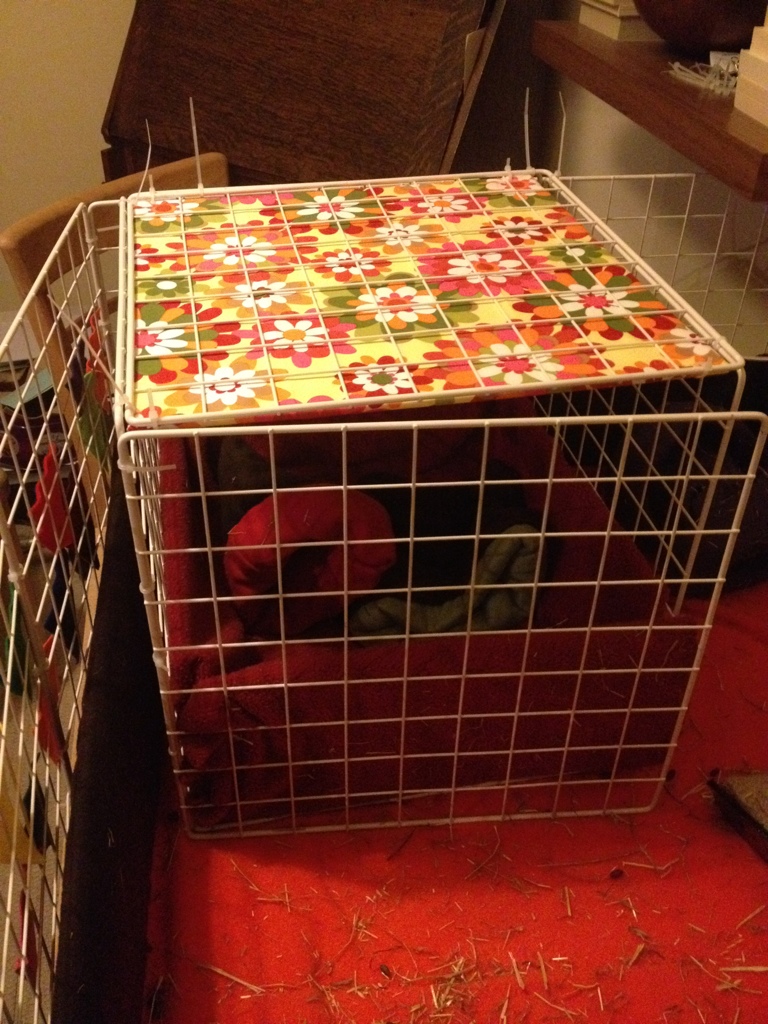
So I built them a mini-cage, with an opening door, so that they can just hop in (maybe with a cucumber bribe) and I can just shut the door and carry them off.
I love the floral roof! I hope they will too. Let’s just hope it doesn’t rain tomorrow. I’m not sure they’ll like the bus.